A Stomach Parasite Is Spreading Through American Food — and the System Built to Catch It Was Cut a Year Ago

Every time an American family sits down to a bowl of fresh salad or a plate of sliced fruit, they are placing trust in a system most of them never think about — a web of public health workers, labs, and federal programs quietly watching the food supply for signs of danger. That system has a significant gap in it right now, and families across the country are feeling the consequences.
A parasitic illness called cyclosporiasis is spreading through dozens of U.S. states in the summer of 2026, causing what doctors describe as "explosive" watery diarrhea, stomach cramps, nausea, and fatigue that can last for weeks. The timing has alarmed public health experts, because just one year before cases began to surge, the federal program specifically designed to detect outbreaks like this one was quietly scaled back by the Trump administration.
What This Parasite Does to the Body
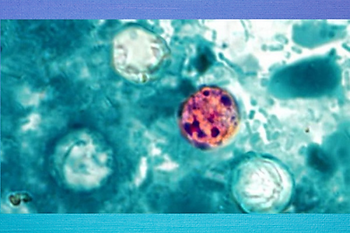
The culprit is a microscopic parasite called Cyclospora cayetanensis. Unlike some foodborne illnesses that come from animals, cyclospora spreads when food or water becomes contaminated with human fecal matter — most often through poor sanitation in farming or food handling environments. Past U.S. outbreaks have been tied to fresh raspberries, cilantro, basil, and pre-washed bagged salad mixes sold in grocery stores.
For most healthy adults, cyclosporiasis is a miserable but survivable experience. For young children, elderly people, pregnant women, and anyone with a weakened immune system, it can become much more serious. Without treatment, the illness can cycle on and off for weeks. The standard antibiotic — trimethoprim-sulfamethoxazole — works well, but only if a doctor knows to test for the parasite in the first place. Many routine stool tests do not automatically look for cyclospora, which means patients can go undiagnosed for days or weeks while they get sicker.
The Early-Warning Program That Was Pulled Back
For nearly three decades, a federal program called FoodNet served as one of the country's most important tools for catching foodborne illness before it spread widely. The program was a partnership between the CDC, the U.S. Department of Agriculture, and state health departments. It tracked eight dangerous pathogens — including cyclospora, campylobacter, listeria, shigella, vibrio, and yersinia — looking for unusual clusters of cases that could mean a contaminated food product was moving through the supply chain.
In July 2025, the Trump administration reduced FoodNet's mandatory tracking to just two pathogens — salmonella and E. coli. Monitoring for cyclospora and five other illnesses became optional for participating states, meaning not every state would continue to report cases in a consistent, timely way. Around the same time, the CDC dissolved its Division of Parasitic Diseases and Malaria, moving the specialists who had spent their careers studying parasites like cyclospora into other roles across the agency.
One year later, the country is dealing with one of its largest cyclosporiasis outbreaks in years — and public health officials are trying to track and contain it with fewer resources than they had before.
What Experts Are Saying
Public health researchers have not held back in their criticism of the decision to cut FoodNet's scope. Craig Hedberg, a professor in the Division of Environmental Health Sciences at the University of Minnesota, pushed back strongly against the idea that trimming the surveillance program was simply a sensible cost-cutting move.
"[The cuts] normalize the idea that foodborne disease surveillance is expensive and unimportant" when it is in fact "the foundation of our food safety system."
Hedberg's point gets at something that is easy to overlook during normal times: public health surveillance systems are not designed to do anything visible when everything is going well. Their entire value lies in what they prevent. When those systems are reduced or removed, the gap does not become obvious until an outbreak is already underway — and by that point, more people are already sick.
Steps Families Can Take Right Now
While investigators work to pinpoint the source of the current outbreak, there are practical steps that families can take to lower their risk. Wash all fresh produce under running water before eating it, even packages that say "pre-washed" on the label. When feeding young children, elderly family members, pregnant women, or anyone with an immune condition, consider cooking leafy greens rather than serving them raw. Pre-washed bagged salad mixes, which have been linked to cyclospora in previous outbreaks, are worth avoiding for now.
If anyone in your household develops persistent stomach symptoms — especially watery diarrhea that lasts more than a few days — contact a doctor and ask specifically about testing for cyclospora. Because many standard tests do not screen for this parasite automatically, asking directly is important to getting the right diagnosis and the right treatment faster.
These precautions are reasonable and worth following. But they also represent the boundary of what individuals can do on their own. Stopping an outbreak before it reaches tens of thousands of people — before a contaminated food product travels from one state to dozens — requires a fully functioning, consistently funded public health system working behind the scenes every single day, whether or not anyone is paying attention to it.